
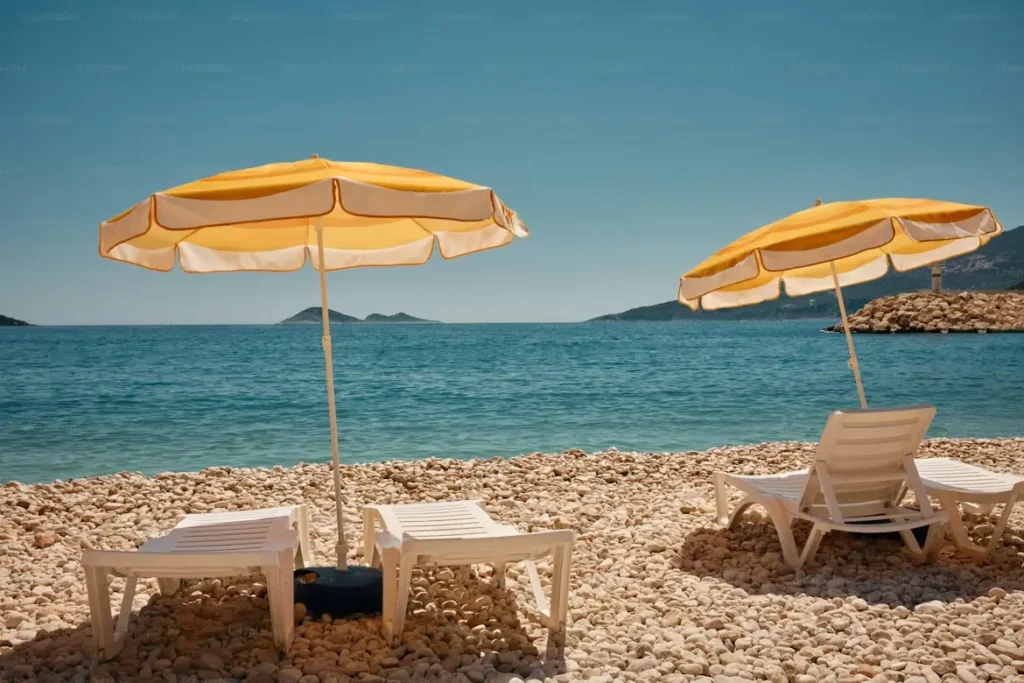
Playa Balandra Beach is the highlight of this Playa Balandra Beach Mexico travel guide 2026, located next to La Paz in Baja California Sur on Mexico’s Baja Peninsula. It is part of a federally protected natural area, which is why it still feels unusually pristine despite its growing popularity.
What it really is: a shallow, turquoise bay with sandbars where you can wade far out without getting hit by waves. Multiple sources describe the water as extremely shallow, often staying around waist/hip level in many sections, depending on the tide.
Why it’s famous : The water looks unreal because the bay is shallow and protected, so you get that “natural infinity pool” effect most of the day.
- It’s managed as a protected area with strict visitor capacity and time slots, so it doesn’t turn into an all-day, overcrowded mess.
- The iconic mushroom-shaped rock formation (El Hongo) is one of the most photographed natural landmarks in the region.
Best for: – Families and non-strong swimmers who want calm water (with one important safety exception explained later).
- Photography: bright turquoise water, desert hills, and the El Hongo landmark in one frame.
- Travelers who like nature with rules (this is not a “beach bars and vendors” beach).
Where Is Playa Balandra Beach Located In Mexico
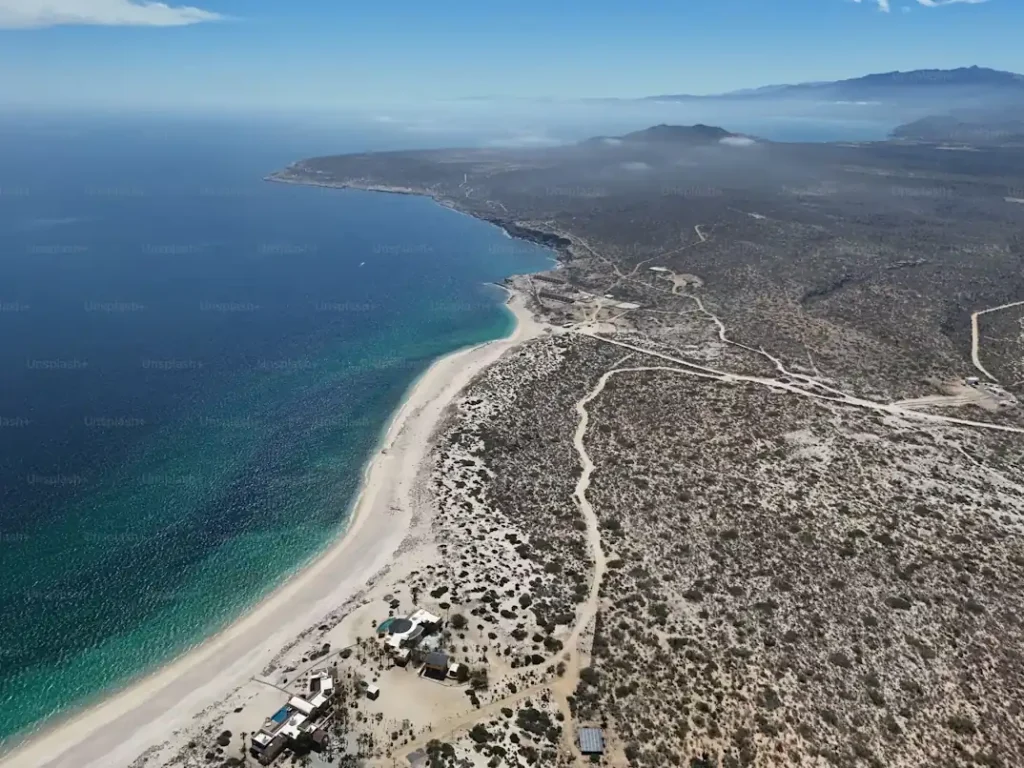
Before planning your trip, it’s important to understand where Playa Balandra Beach is located in Mexico and how accessible it is.
Exact location
Playa Balandra is on the coast just northwest of La Paz, in Baja California Sur, facing the Gulf of California (the Gulf of California, often called the Sea of Cortez).
For precise navigation, the beach is commonly mapped around 24.32081° N, -110.32424° W.
Distance from La Paz
By road, it’s roughly 27 km and about 25–30 minutes by car from La Paz in normal conditions.
Map context
Geographically, the area sits where desert meets sea, with rugged hills, dunes, and coastal ecosystems such as mangroves. Moreover, official management documents describe the surrounding protected area as ecologically important, highlighting its extensive mangroves and diverse marine habitats.
How To Get To Playa Balandra From La Paz
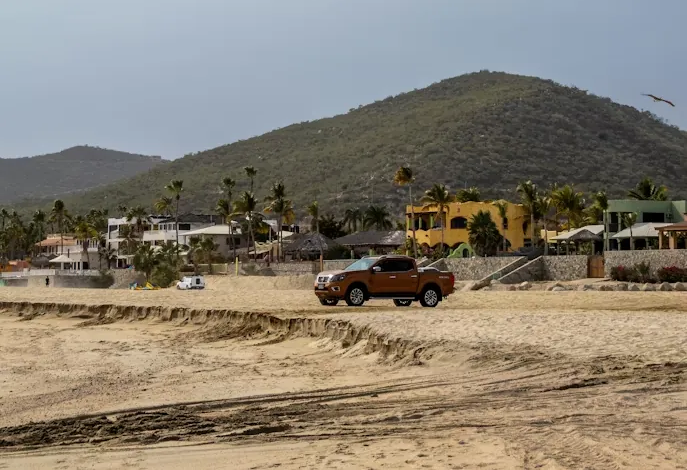
Not sure how to actually get there? Here’s a complete guide on how to get from La Paz to Playa Balandra
By car
Car is the best option for flexibility because you control:
- arrival time (critical for crowded dates)
- leaving when your shift ends – combining Balandra with a second beach like Tecolote.
Rome2rio estimates the driving distance at 27.3 km and about 27 minutes.
Taxi and Uber
Taxis exist, but the main issue is not getting there; it’s getting back. Cell coverage can be unreliable near the beach, and many guides warn you not to assume you can summon a ride immediately at the exit.
Uber availability in La Paz is confirmed by Uber itself, but pickup times may be longer than in bigger cities.
Typical taxi estimates (one-way) vary widely by source and season. Rome2rio commonly lists ~$1,100–$1,400 MXN for a taxi trip from La Paz to Balandra (one-way estimate).
Guided tours
Tours solve the two biggest Balandra headaches: – timing (they plan around shifts and lines) – equipment (kayaks, snorkel gear, shade setups, food)
Costs vary depending on whether you choose a road tour, a boat-based experience, or a combined day that includes sea lions or whale sharks along with Balandra. For example, a structured hike, kayak, and snorkel tour is often sold as a full-day experience and typically costs around £95 per adult on major platforms, although prices can change.
Local operators also sell fixed-price beach/boat experiences (often in the ~2,000 MXN per person range for shared tours), but inclusions vary.
Transport option table
| Transport Option | Time | Cost | Best For |
| Rental car / private car | 25–30 min | Fuel costs + parking (parking itself is generally free; costs depend on your rental) | Beating crowds, flexibility, and families |
| Taxi | ~27 min | Often estimated at around 950–1,400 MXN one way, depending on route and pickup point. | One-way drop-off with pre-arranged pickup |
| Uber/rideshare | Similar to taxi (time) | Varies; rideshare is available in La Paz, but pickup can be slower outside the city | City rides; not ideal as your only return plan |
| Public bus (Playa Bus / EcoBajaTours routes) | ~30 min | Commonly cited around 68 MXN each way; schedules change | Budget travelers who can work around shift times |
| Guided tour (road or boat) | Half-day to full day | Highly variable (mid to high) | Low-stress planning, gear included, small groups |
Playa Balandra Entrance Fee And Rules
Visitors must purchase an entry bracelet of about MXN 125 and follow a fixed two shift system from 8:00 to 12:00 and 13:00 to 17:00, with a maximum of 450 people allowed per shift. Because of this limit, arriving late can lead to being denied entry.
you can read full detail of enternce fee and rules of playa balandra beach
It is not just a typical beach but a federally protected natural area, which is why access is carefully controlled. In return, visitors experience fewer crowds, a quieter atmosphere, cleaner sand, and an environment that feels natural rather than commercialized.
Entrance fee (verified for 2026): CONANP lists MXN 125 per person, per day (federal “cobro de derechos”). CONANP also lists exemptions (children under 12, seniors/pensioners/retirees, and people with disabilities, with valid ID) and discounts (students/teachers; plus other visitor-category discounts as detailed on the official fee panel).
Time slots and capacity (standard operating model):
- Turno 1: Entry 8:00, exit 12:00
- Turno 2: Entry 13:00, exit 17:00
- Capacity: 450 people per shift
This is the part that catches people off guard: the fee isn’t the real limiter, the quota is. Once the shift hits capacity, entry can stop even if you’re already at the gate.
Digital bracelet (how it works): CONANP states there are 400 digital bracelets for Turno 2 (the afternoon shift). The Municipality of La Paz explains the digital process: you purchase via CONANP’s “Descubre las Áreas Naturales Protegidas” portal, select your time slot, and receive a QR code to show at entry.
(Note: as of the municipal announcement available to verify, the city confirms the digital system and the two shifts/450-per-block cap, but does not publish the “400 digital bracelets” number itself; that specific quantity is published by CONANP.)
Key rules (plan on these being enforced)
- No alcohol
- No loud music
- No littering
- No commercial setups
- Respect the protected ecosystem
Important accuracy note: CONANP’s published online visitor rules explicitly include “do not leave trash,” “use authorized trails,” “do not climb the dune or El Hongo,” “use the dry toilets,” and “use caution around the fosa.” “No alcohol” and “no loud music” are not listed in that specific CONANP online rules panel, so treat them as commonly enforced protected-area expectations and follow on-site signage and staff instructions.
Practical tips
Arrive 30–45 minutes early, especially in high season, because capacity is fixed and late arrivals are the first to lose out. Bring more water than you think you’ll need and plan your own shade; CONANP lists only limited on-site services (notably toilets and information modules), so you should assume you’ll be largely self-sufficient once you’re inside.
Final reminder: Check the official pages the day you go because procedures, purchase steps, and enforcement details can change by season or operational updates.
Best Time To Visit Playa Balandra Beach
Best months with weather breakdown
Official protected-area guidance specifically recommends visiting from October to March.
That lines up with climate reality: – Summer (especially July–September) is hotter and also overlaps with the period when tropical storms are more likely to affect Baja California Sur, with August–October often highlighted as the peak storm window.
Want fewer crowds and easier entry? Keep reading to see the best months and exact times to visit Balandra.
La Paz has a generally dry climate, but the wetter stretch is commonly mid-summer through early fall.
Best time of day
Because Balandra is shift-based, “best time of day” is basically: – Morning shift if you want calmer logistics (and often cooler temperatures).
– Afternoon shift if you want warmer water and later light, but you may deal with a more chaotic entry line depending on the season.
Photography tip: midday sun can flatten colors; if you care about photos, you’ll usually prefer early in your shift or toward the end of the afternoon (heat permitting).
Crowd vs experience
Crowds don’t behave like a normal beach because of the 450-per-shift cap. Even in high season, it won’t scale infinitely, but the line to get in can still be the problem if you arrive late.
Month Table
| Month | Weather | Crowd Level | Verdict |
| Jan | Mild days, cool nights; low rain | High | Best comfort, plan entry early |
| Feb | Similar to Jan, pleasant | High | Great if you can manage shift timing |
| Mar | Warming up, still low rain | High | One of the best overall months |
| Apr | Warmer, very dry | Medium–High | Excellent shoulder month |
| May | Hotter, still mostly dry | Medium | Great water, bring serious sun protection |
| Jun | Very hot, clear skies | Lower | Beautiful, but the heat can be punishing |
| Jul | Hot, rain chances rise | Lower | Quiet but sweaty; watch forecasts |
| Aug | Hottest + wetter; more storm risk | Low | Only if you handle heat/humidity well |
| Sep | Hot + wettest stretch; storm risk peaks | Low | Not ideal for most travelers |
| Oct | Cooling slightly; rain tapers off | Medium | Strong shoulder month |
| Nov | Comfortable, drier | Medium–High | Excellent conditions |
| Dec | Mild; peak travel season | High | Great weather, plan around lines |
Why Playa Balandra Is Famous
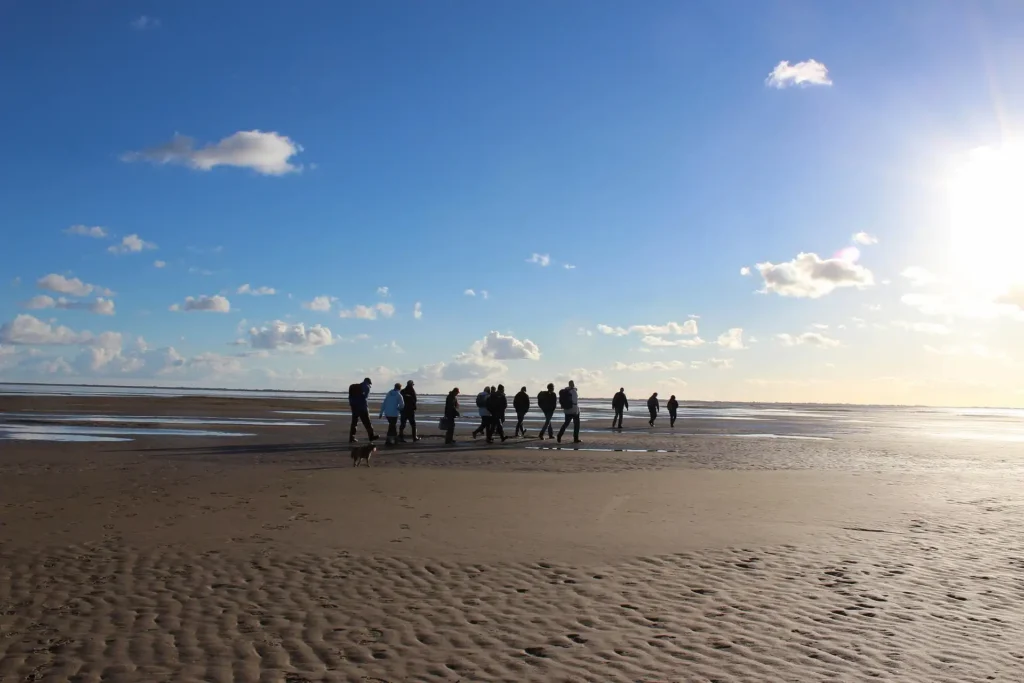
Playa Balandra doesn’t feel like a typical beach. It feels like a natural swimming pool carved into the ocean.
This beauty is protected—see the exact Playa Balandra entrance fee rules before planning your visi
The first thing you notice is the water. It’s not just clear, it’s almost unreal. Soft turquoise shades that shift as the sunlight moves, with visibility so high you can see the sand patterns beneath your feet.
What makes it truly unique is how shallow the bay is. You can walk 20 to 30 meters into the water, and it still barely reaches your waist. There are no strong waves, no sudden drops, and no chaos. Just calm, warm water stretching endlessly in front of you.
That’s why families, non-swimmers, and photographers all love it for completely different reasons.
Another reason it stands out is how untouched it feels. There are no big hotels, no loud beach clubs, and no commercial noise. It’s a protected natural area, which means what you see here is raw, quiet, and rare.
And then there’s the famous mushroom-shaped rock, often called “El Hongo”. It’s become the symbol of Balandra, but in reality, the entire bay is the attraction.
What most people don’t realize is that Balandra isn’t about doing things. It’s about slowing down. Floating, walking, sitting, and just being there.
The Story Behind Balandra Mushroom Rock and Things To Do
The Story Behind Balandra Mushroom Rock
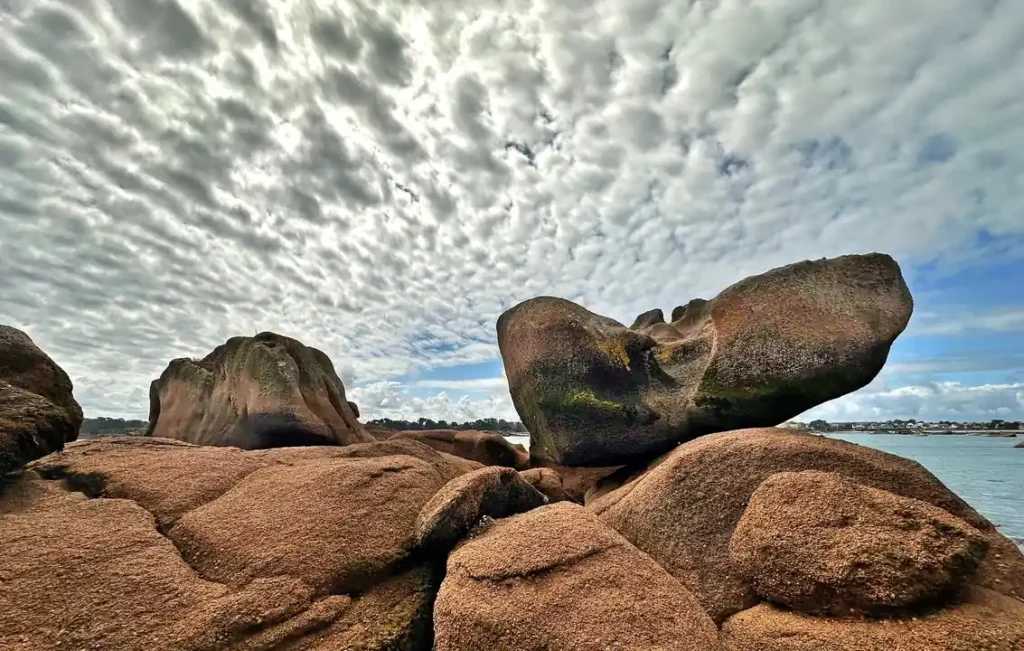
“El Hongo” (the mushroom rock) is a mushroom-shaped stone landmark shaped by erosion processes over long time periods, often explained as differential erosion (different layers wearing away at different rates).
The reason it’s iconic is simple: it’s a one-frame symbol of Balandra, and it’s close enough to reach by foot/wading for most visitors during many tide conditions.
One detail many visitors don’t know until they read deeper: multiple accounts state the rock was damaged or toppled after tourists climbed it in the late 1980s and later restored/reinforced in the early 1990s. Most narratives align on 1989 as the collapse event and 1993 as a restoration milestone, although some sources differ on the exact specifics.
What matters today: climbing is explicitly prohibited in visitor regulations and is treated as a serious conservation issue.
Things To Do At Playa Balandra Beach
Balandra is not an “activities resort.” It’s more like: pick two or three simple things and do them slowly.
Swimming/wading: the default activity; the water is calm and shallow across much of the bay.
Kayaking/paddleboarding: doable and often recommended, either with your own gear or via guided experiences that include it.
Hiking viewpoints: There are short hikes to viewpoints around the bay. One popular mapped route is the Mirador Balandra trail at around 4.8 km out-and-back, with the best visiting season typically listed as October through April.
Photography: turquoise water + desert hills + El Hongo makes it one of the most photogenic beach landscapes in the region.
Activity table
| Activity | Cost | Difficulty | Worth It |
| Swim / wade the bay | Free (+ bracelet) | Easy | Yes, this is the point |
| Walk to El Hongo | Free (+ bracelet) | Easy–Moderate (depends on tide/route) | Yes, iconic photos |
| Kayak/paddleboard | Often via tours or bring-your-own; tour pricing varies | Easy–Moderate | Yes, if you want to explore beyond the shore |
| Mirador hike | Free (+ bracelet) | Moderate (heat matters) | Yes, for panoramic views |
| Wildlife watching | Mostly free | Easy | Worth it if you’re patient |
Is Playa Balandra Good For Swimming
For a deeper breakdown of safety, conditions, and the best spots, see this complete guide to swimming in La Paz beaches
Most of the time, yes. The beach is famous because you can stand and wade in calm water for long distances.
But here’s the thing: there is a known deep/current-prone area often referred to as the “fosa.” A 2024 local report quotes a researcher from Universidad Autónoma de Baja California Sur explaining it’s not a bottomless pit or mystery; it’s a sandy depression shaped by interacting currents, and it can pose a risk because stronger currents may form there, especially for weaker swimmers.
The same report notes that tide behavior can change quickly in winter months (December–February), which can catch people off guard if they walk out comfortably and then struggle returning.
So the real answer is: – Ideal for families and relaxed swimmers who stay in the shallow zones.
– Not a place to be casual about ocean conditions; respect signs, ask locals where not to go, and don’t push into darker water if you’re not confident.
Playa Balandra Parking Guide
Parking exists, but capacity and arrival timing are the real constraints.
- Multiple visitor accounts emphasize: – Access doesn’t start before the shift time, but it’s smart to arrive early to line up.
- People who get in early may snag shade structures (palapas) before they’re taken.
- Practical strategy: – If you want Shift 1 (8–12), aim to be nearby well before 8:00 during busy periods.
- If you want Shift 2 (13–17), plan around the midday reset: visitors must exit, and the next wave enters after.
Best Hotels Near Playa Balandra
Most people stay in La Paz and day-trip to the beach. That means you’re usually choosing hotels for: – walkability to food and the Malecón – parking (if you’ll drive) – comfort level.
Here are reliable, commonly booked options with publicly listed price ranges (always seasonal).
| Hotel | Price Range | Distance | Best For |
| Hotel Posada LunaSol | Often positioned as budget-to-lower midrange; rates vary | La Paz base (day trip) | Value + central vibe |
| One La Paz | Generally, budget/mid-budget, depending on dates | La Paz base (day trip) | Simple, practical stays |
| Seven Crown La Paz Centro Histórico | Mid-range | La Paz base (day trip) | Central location + comfort |
| Hotel Catedral La Paz | Mid-range | La Paz base (day trip) | Rooftop/pool style city stay |
| Baja Club Hotel | Luxury/boutique | La Paz base (day trip) | Design-forward, upscale experience |
| Hotel Indigo La Paz Puerta Cortés | Upper upscale | Closer to the beach road than downtown hotels | Resort amenities + marina |
| entity[“hotel”, “Club Hotel Cantamar Beach & Marina”, “Pichilingue, BCS, Mexico”] | Budget-to-mid | About 4.8 km from Balandra | Staying near the beach corridor |
Cost of Visiting Playa Balandra Budget Breakdown
Exact totals depend on whether you take the bus, taxi, or drive yourself, and whether you bring your own food/shade.
Key fixed cost: the bracelet. The “headline” rate is often shown as ~125 MXN, while local reporting frequently describes a practical split (e.g., ~60 MXN nationals / ~120 MXN foreigners) and exemptions.
| Expense | Estimated Cost |
| Entrance bracelet | ~125 MXN (with exemptions/discounts depending on category) |
| Bus transport (round trip) | Roughly 136 MXN round trip if 68 MXN each way; schedules may change |
| Taxi transport (round trip) | Often expensive; one-way estimates can run ~950–1,400 MXN |
| Food + water (bring your own) | Varies; there may be no reliable vendors on the beach itself |
| Shade/chair rentals | Sometimes available outside; not guaranteed |
Playa Balandra Vs Tecolote Beach
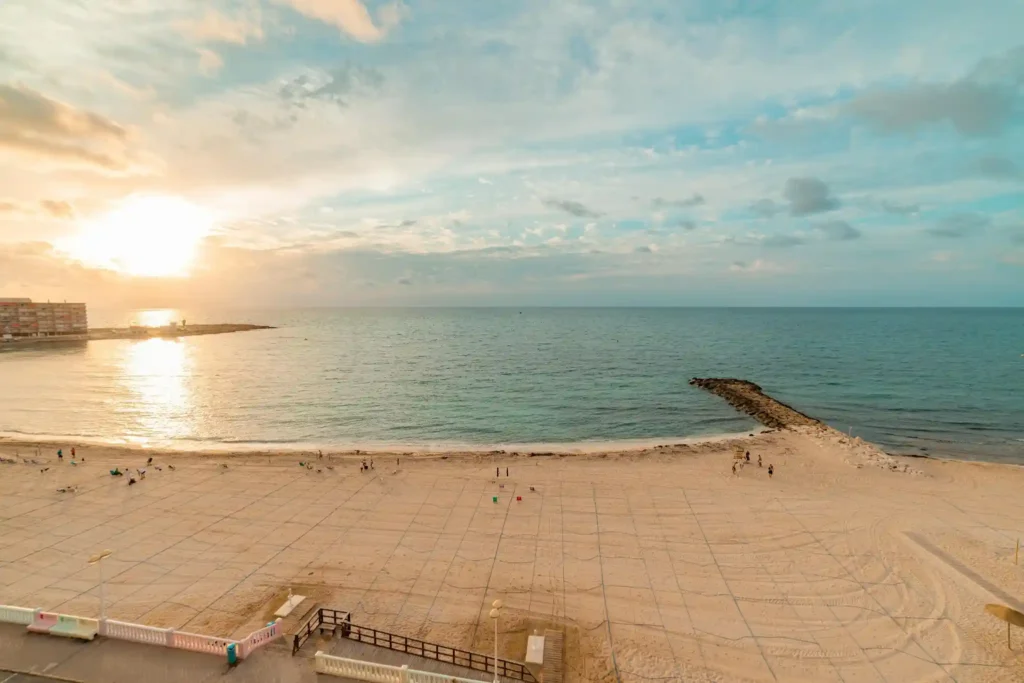
Playa Tecolote is nearby on the same coastal road and is often treated as the “services beach” compared to Balandra’s protected minimalist setup. Travelers frequently recommend Tecolote for food, longer stays, and a more open, social beach day.
| Feature | Balandra | Tecolote |
| Crowd | Capped per shift (450), but lines can be intense | No identical shift-cap system commonly reported; can feel busy, but different patterns |
| Water type | Very shallow bay, calm zones | More open beach feel; varies by day (often more breeze/wave) |
| Food availability | Limited; plan to bring your own | More likely to find food/services nearby |
| Vibe | Protected, quiet, rules-forward | More casual, stay-all-day energy |
Is Playa Balandra Worth Visiting
Pros: – A genuinely rare visual: shallow turquoise water + desert coastline in one place.
- The protected-area rules keep it cleaner than most highly visited beaches.
- Great for low-effort enjoyment: wade, float, take photos, hike a viewpoint.
Cons: – The time-slot system means it’s not a spontaneous “roll up at any time” beach.
- Infrastructure is limited (you’re expected to bring essentials and follow strict conservation rules).
- Safety: the “fosa” area and fast tide changes mean you should pay attention, especially with kids.
Who should visit: – First-time La Paz visitors who want one “signature Baja” beach day.
- Families who stay in the safe shallow zones.
- Photographers and slow travelers who don’t mind structure.
Who might skip it: – Anyone who hates lines and strict time windows (Tecolote may suit you better).
Travel Tips For Visiting Playa Balandra
Bring: – Water (more than you think), snacks, and a trash bag because leaving trash is prohibited, and you should plan to pack everything out.
- Sun protection: hat, shade, and sunscreen are explicitly recommended in official guidance.
- Cash for toilets or small rentals/donations (travelers frequently mention this).
- Wear water shoes if you plan to walk around rocky edges toward El Hongo.
Timing strategy that actually works: – Choose Shift 1 or Shift 2 first, then plan your second beach (Tecolote) as a fallback if you miss entry or want to extend your day.
If you rely on public bus schedules, confirm them locally because timetables can drift.
Do’s and don’ts: – Do: stay on trails, avoid climbing dunes/rock, use toilets, take everything out.
Don’t: assume you can drink alcohol on the beach; many visitor guides list it as prohibited.
Hidden Things Tourists Don’t Know
The first Sunday locals rule: local outlets and travel guides report that the first Sunday of each month is reserved for La Paz locals (“domingo paceño”). Some reporting suggests authorities may allow tourists in if locals don’t fill capacity, but you should not plan on it if your schedule is tight.
Digital bracelets and Shift 2: local reporting states digital bracelet purchase may be available only for the second shift, with physical bracelets still offered in-person for both shifts.
The deep spot: the “fosa” isn’t a myth, but it’s also not magic. It’s a natural depression where currents can be stronger, and locals urge caution, especially for non-swimmers and in winter tide conditions.
Sample 1-Day Itinerary for Playa Balandra
Morning:
- 6:45–7:30: Depart La Paz (earlier on peak dates).
- 7:30–8:00: arrive and queue for Shift 1 entry.
- 8:00–11:30: wade/swim, photos, quick walk toward El Hongo if tide allows.
Mid-day:
- 11:30–12:00: start packing and exit before shift ends.
- 12:00–13:00: drive to Tecolote for lunch OR return to La Paz for a break.
Afternoon:
- Option A (structured): return for Shift 2 if you have bracelets and want a second round.
- Option B (flexible): stay at Tecolote longer and skip the second entry line.
Conclusion
Playa Balandra stands out not because it tries to compete with commercial beach destinations, but because it deliberately limits itself. With a strict cap of 450 visitors per shift, a regulated entry system, and protected-area rules enforced on-site, the experience remains unusually clean, quiet, and visually striking compared to most high-traffic beaches.
What the data makes clear is that Balandra rewards preparation more than spontaneity. Travelers who plan around the time-slot system, arrive early, and bring their own essentials consistently get a smooth, high-quality experience. Those who don’t often face entry denial or logistical frustration, not because the destination fails, but because the system is designed to protect it.
From a value perspective, the beach delivers strong returns: a relatively low entry fee, minimal commercialization, and a setting that combines shallow turquoise water, desert landscapes, and ecological preservation in one place. However, it is not built for convenience or flexibility, and that trade-off is intentional.
In practical terms, Playa Balandra is worth visiting if you approach it as a controlled natural experience rather than a casual beach stop. Plan your timing, respect the rules, and treat the visit as a short, focused window, and it will likely be one of the most distinctive and visually memorable coastal experiences in Baja California Sur.
FAQs About Playa Balandra Beach
Is it free?
No. Entry commonly requires a paid bracelet (often shown around ~125 MXN with category-based discounts and exemptions).
Can you swim?
Yes, and the beach is famous for calm, shallow water. Still, pay attention to restricted/deeper areas and currents.
How deep is the water?
Much of the bay is shallow enough to wade far out (often around waist/hip levels depending on tide), but there are deeper/current-prone zones.
Are there facilities?
Official listings mention information modules and toilets, with dry toilets specifically referenced in visitor rules and traveler experiences.
Do you need to book ahead?
In many cases, yes, especially for digital bracelet systems and peak season. Capacity is limited per shift.
What are the visiting hours?Commonly two daily shifts: 8:00–12:00 and 13:00–17:00, with 450 per shift.
