
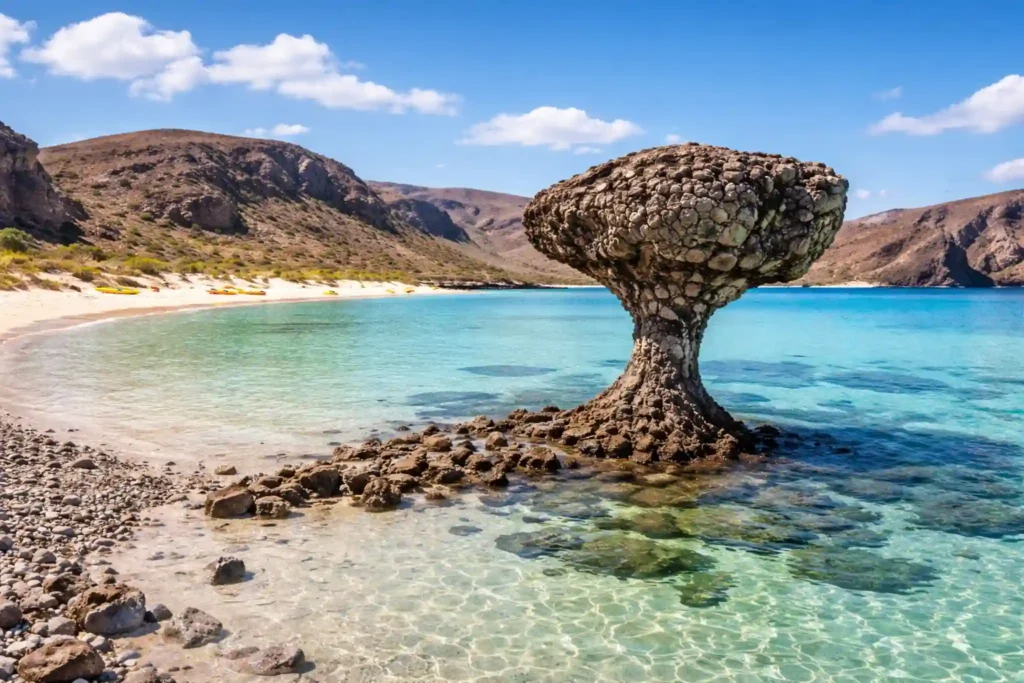
Location and geographic context

Playa Balandra Beach location in Mexico sits on the Bay of La Paz, just outside the city of La Paz, on Mexico’s Baja California Peninsula, along the Gulf of California(often called the Sea of Cortez).
What makes this location special is the setting: an enclosed, shallow bay where desert hills and coastal dunes meet calm, turquoise water. The beach is not just a pretty shoreline. It sits within a federally protected area managed by CONANP, which was created to conserve mangroves, dunes, reefs, and wildlife.
If you’ve ever seen photos of water so shallow and clear that it looks unreal, there’s a good chance you were looking at Playa Balandra.
It’s not just a beautiful beach. It’s one of the few places where desert hills, white sand, and calm turquoise water come together in a way that feels almost artificial in real life.
The first time you step into the water, you don’t “swim” into it. You walk. And keep walking. And somehow, you’re still in waist-deep water.
This guide doesn’t just tell you where Playa Balandra is located.
It shows you exactly how it fits into Baja California Sur, how to get there without messing up the entry system, and what to expect so your trip doesn’t turn into a frustrating experience.
Exact geographic location and coordinates
Planning your trip? Check out our complete Playa Balandra Beach Mexico travel guide for 2026 to make the most of your visit.
Because people mean different things by “coordinates” (an exact pin on the sand, the bay center, or the protected area footprint), it helps to give two coordinate references:
1) A practical beach pin you can use in mapping apps
OpenStreetMap’s mapped node for Playa Balandra shows 24.3212852, -110.3259368.
2) A coordinate reference for the broader protected zone recognized in the UNESCO serial property
The UNESCO map table for “Balandra Zone of Ecological Conservation and Community Interest” lists 24°18′44″ N, 110°19′44″ W as the component’s coordinate.
These are close to each other, but not identical, because one is a beach feature pin and the other is a component reference coordinate. That difference is normal in conservation mapping.
Regional positioning in plain English
Playa Balandra Beach is on the eastern side of the Baja Peninsula, facing inward toward the Gulf rather than out to the open Pacific. That geography matters because it helps explain the water conditions: the bay is naturally more sheltered than many open coast beaches.
It is also part of the “Balandra Wildlife Protection Area,” which is a designated protected natural area rather than a typical urban beach.
Location snapshot table
| What you need | Details |
| Country | Mexico |
| State | Baja California Sur |
| Nearest major city | La Paz |
| Coastal body of water | Gulf of California (Sea of Cortez) |
| Practical beach coordinates | 24.3212852, -110.3259368 |
| UNESCO component coordinate reference | 24°18′44″ N, 110°19′44″ W |
| Protected status | A federally protected natural area managed by CONANP. |
| Typical visiting format | Two access shifts with a cap per shift |
This table consolidates mapping and governance references from OpenStreetMap, UNESCO’s component listing, and CONANP’s protected area portal.
Baja California Sur and why it matters for Balandra
To understand where Playa Balandra “fits,” you need a quick mental map of Baja California Sur.
The state context
Baja California Sur occupies the southern half of the Baja California peninsula. It is bordered by the Pacific Ocean on the west and south, and by the Gulf of California on the east. Its capital is La Paz, positioned on a sheltered bay along the peninsula’s eastern coast.
This is not a small detail. The peninsula’s geography creates two very different coastal personalities:
On the Pacific side, you often get bigger surf, stronger longshore currents, and cooler water patterns driven by open ocean conditions.
On the Gulf side, you more often find protected bays, clearer shallows, and calmer paddling conditions, especially in coves and inlets.
Playa Balandra is firmly in the Gulf side story, which is why it is famous for shallow, calm water rather than wave action.
Why does this region produce Balandra’s landscape?
The Baja Peninsula is known for dramatic transitions where arid terrain meets the sea. Even on the same day, you can go from cactus and scrubland to bright, shallow coastal water.
The protected area’s own management framework highlights that the site includes beaches, dunes, and geologically relevant features, including the famous mushroom-shaped rock formation.
Protected area scale and significance
The federally protected “Área de Protección de Flora y Fauna Balandra” was declared by decree published in Mexico’s official gazette on 30 November 2012.
The management program describes the protected area as covering 2,512.73 hectares.
Separately, UNESCO’s table for the Gulf of California World Heritage serial property lists a Balandra component of 1,197 hectares under the name “Balandra Zone of Ecological Conservation and Community Interest.”
You do not need to memorize those numbers, but they explain why access is controlled. This beach is treated as a conservation site with a defined carrying capacity model, not just a public shoreline.
Distances and how to reach Playa Balandra Beach
Most visitors experience Balandra as a short trip from La Paz, but a significant number also arrive via Los Cabos (especially if they fly there), then drive or bus north.
Distances from major nearby cities
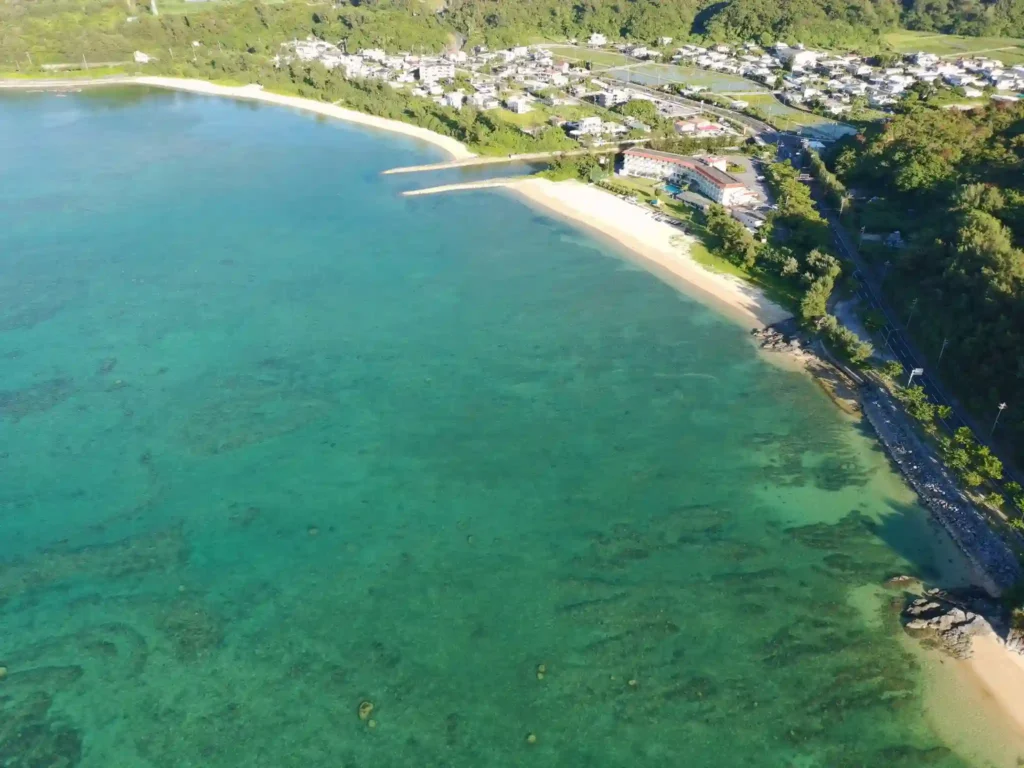
For practical trip planning, driving distance matters more than straight line distance because you follow the coastal road toward Pichilingue and Tecolote.
Rome2rio’s route summary for La Paz to Playa Balandra shows a driving distance of about 27.3 km and a typical drive time of around 27 minutes, which matches the common “about half an hour” guidance you see across local travel planning resources.
From the Los Cabos area, Rome2rio lists roughly 156 km road distance from Cabo San Lucas to Balandra and about 2 hours driving time, while San José del Cabo to Balandra is listed around 184 km and about 2 hours and 20 minutes driving time.
From Todos Santos, Rome2rio lists around 79.5 km by road and about 1 hour driving time.
Treat these as reasonable planning estimates and always buffer extra time for entrance logistics and for peak season traffic near the beach access road. The access system is time window-based, so arriving late can cost you the entire shift.
Distance table for planning
| Starting point | Approx road distance | Typical drive time | Notes |
| La Paz | ~27 km | ~25 to 30 min | Most common base; best for day trips. |
| Todos Santos | ~79.5 km | ~1 hr | Good option if you want a quieter town base. |
| Cabo San Lucas | ~156 km | ~2 hrs | Long day trip; start early to match shift access. |
| San José del Cabo | ~184 km | ~2 hrs 20 min | Similar to the Cabo day trip, plan around the bay’s schedule. |
| La Paz airport (Manuel Márquez de León) | Close to La Paz | Varies | The airport is the nearest major flight gateway for Balandra. |
| Pichilingue ferry terminal | Near La Paz | Short drive from the city | Relevant if you arrive by ferry from mainland Mexico. |
Distances are based on published route summaries from Rome2rio plus official transport context for airport and ferry access.
Transportation options and how to get there
Most routes fall into five practical categories: rental car, taxi, public beach bus, guided tour, or private transfer.
Rental car
If you care about timing, a rental car is the simplest way to control your arrival. It also makes it easy to combine Balandra with nearby beaches on the same road. Travel guidance commonly describes the drive from La Paz as straightforward and in good condition.
Taxi
Taxi is realistic for small groups, but you should plan both pickup and return. The beach has two access points, and getting a taxi back can be harder than getting dropped off, especially in the heat and peak crowds. Rome2rio lists taxi as a direct option between La Paz and Playa Balandra with travel times similar to driving.
Playa Bus
La Paz has a beach bus service widely referred to as “Playa Bus,” which connects the city with several nearby beaches, including Balandra.
A local news report in El Sudcaliforniano notes that Playa Bus continues to cover destinations including Balandra, Tecolote, Pichilingue, and Coromuel, and it provides fare tiers, listing 80 pesos for Pichilingue, Balandra, and Tecolote.
Rome2rio also lists buses operated by EcobajaTours for La Paz to Playa Balandra.
One complication: bus schedules do not always align cleanly with the beach’s shift-entry windows, and seasonal adjustments can occur. That is why locals often recommend building slack time or choosing the afternoon shift if using the bus.
Guided tours
If you are staying in Los Cabos and want the simplest logistics, day tours bundle transportation, and sometimes include Balandra with La Paz and Todos Santos. Some operators explicitly describe hotel pickup and travel to a marina or to the beach area.
Tours are also a way to reduce parking stress and avoid dealing with bus timing, but the tradeoff is less freedom inside the bay and less flexibility if you want to stay for the full shift.
Ferry plus road
This is not how most people reach the beach on a day trip, but it matters for overland travelers doing peninsula routes.
Baja Ferries operates routes from the Pichilingue terminal in La Paz to mainland ports including Mazatlán and Topolobampo. The company’s official site presents these as core route cities, and third-party ferry summaries describe Pichilingue as the La Paz ferry terminal for those crossings.
If you arrive by ferry, you still drive from La Paz to Balandra as described above.
Transportation comparison table
| Option | Best for | Typical cost range | Key tradeoffs |
| Rental car | Flexibility and early entry | Varies by season | Parking and driving responsibility, but with the best timing control. |
| Taxi | Small groups who want door-to-door | Higher | You must plan return pickup, especially with shift exits. |
| Playa Bus | Budget travelers | Low | Schedule mismatch risk with access shifts; fewer shade options while waiting. |
| Guided day tour | Visitors based in Los Cabos | Mid to high | Less flexibility, but simpler logistics, and often includes an entrance. |
| Private transfer | Families and groups | High | Comfortable and direct, but you still follow the shift rules. |
Costs and constraints are based on a mix of local reporting on Playa Bus fares, published route summaries, and official time slot access requirements.
Why Playa Balandra is famous and what makes it unique
If you strip away social media hype, Balandra’s popularity comes down to a rare combination: calm, shallow water with vivid color, a striking desert backdrop, and a conservation regime that prevents overdevelopment.
The famous visual recipe
CONANP’s protected area portal highlights the bay’s attractions, such as mangroves, dunes, the “stone mushroom,” and the overall landscape.
It also notes that mangroves in the estuary are home to many birds, emphasizing the site’s ecological value rather than just the beach view.
In other words, what people think of as “a beach” here is actually a coastal system: dunes, mangroves, shallow water flats, and nearshore marine habitat. That is exactly the kind of place that gets damaged quickly without controlled access.
Unique geographical features and natural formations
There are a few geographic features that define the visitor experience.
Shallow lagoon and sandbars
Balandra is known for calm, shallow water where you can walk far into the bay. During very low tide, a natural sandbar can appear that lets people cross parts of the bay with shallow water on both sides.
This is not just a fun detail. It shapes how families, beginner swimmers, and paddlers experience the beach, and it is a big reason photos have that bright, milky turquoise look.
What surprises most first-time visitors is how far you can walk into the water without it getting deep. It doesn’t feel like a typical beach. It feels more like walking through a natural pool that stretches endlessly.
Dunes, mangroves, and biodiversity
CONANP’s platform describes the area as having dunes and mangroves and lists visitor rules specifically telling people not to climb the dune or the mushroom rock, a clue that these features are fragile and easily damaged by foot traffic.
The protected area management document also treats dunes, beaches, and the mushroom feature as relevant components in its zonification and ecological planning.
The famous mushroom rock
Because the user requested this explicitly, here is the clear explanation you can use.
The rock formation widely photographed at Balandra is locally described as a stone mushroom. CONANP’s visitor rules explicitly tell visitors not to climb on the dune or the mushroom.
How a “mushroom rock” forms
From a geomorphology standpoint, a mushroom-shaped rock is a type of pedestal rock produced by differential erosion, where different portions of a rock mass wear away at different rates. That basic concept is documented in classic U.S. Geological Survey work on pedestal rocks formed by differential erosion.
In coastal settings, undercutting by wave action and abrasion can also contribute to shaping rock features over time, and USGS coastal erosion resources show the broader principle of wave-driven change in shoreline rock formations. [49]
For Balandra specifically, the simplest accurate phrasing is that the mushroom form is the result of long-term erosion processes that gradually undercut and shape the rock, so the base narrows relative to the upper portion. However, there is no need to overstate exact time scales, because official visitor guidance focuses more on protecting the formation than on dating it.
Who Playa Balandra Is Actually Perfect For (And Who It’s Not)
Before you plan your trip, it helps to understand something important.
Playa Balandra is not for everyone.
You’ll love it if:
- You enjoy calm, shallow water instead of waves
- You want to relax, walk in the water, or kayak
- You care about nature, landscapes, and quiet beaches
- You’re traveling with family or want a peaceful experience
You might not enjoy it if:
- You’re looking for nightlife or beach clubs
- You prefer deep water swimming or surfing
- You want restaurants, music, or full-day flexibility
- You don’t like time restrictions (the shift system matters)
What this really means is simple.
Balandra is not an “activity-heavy” beach.
It’s an experience-focused beach.
And if you go in expecting the wrong thing, it can feel underwhelming.
What this really means for visitors
The rock is a symbol because it is easy to recognize and easy to photograph. It is also easy to damage. That is why the protection rules are blunt: do not climb it.
Safety, swimming, and the best time to visit
Balandra is often described as gentle, but it is not risk-free. The real safety story is about tides, currents in one specific area, desert sun exposure, and how the shift system can push people into rushing.
Swimming experience
Most of the public beach area is shallow enough that many visitors can wade comfortably during low tide, and very low tide can expose sandbanks that make walking far easier than you would expect in a sea bay.
A recent tour operator blog describes the waters as shallow and suitable for families, even giving a typical depth range in feet across some areas.
You should still treat it as open water. One of the best pieces of official advice is embedded in the visitor regulations: be cautious with “the pit” and use authorized trails and toilets.
The “fosa” and why it matters
Local reporting explains that the area commonly called the “fosa” is not a mysterious bottomless hole. A researcher from the Autonomous University of Baja California Sur describes it as a sandy depression formed by interacting currents and notes it can create strong currents in a restricted body of water, making it risky for people.
That same report emphasizes that tide conditions can change quickly and that visitors should pay attention to currents, depth, and sea conditions, especially if they are not confident swimmers.
This lines up with CONANP’s own visitor rule to be cautious with the pit.
A practical safety checklist
1) Assume the sun is the main hazard, not the water. The area is hot and dry, and shade can be limited.
2) Check tide timing if you care about sandbars and long wades. Very low tide changes the experience dramatically.
3) Stay away from the “fosa” zone if you are not a strong swimmer, and do not treat sudden deepening or flow as a photo opportunity.
4) Follow the rules about trails, waste, and toilets. This is a protected site with fragile coastal habitat.
Best time of year to visit
CONANP’s Balandra listing recommends October through March as the best visiting months.
That recommendation aligns with regional climate logic: La Paz has a hot season that runs roughly late May through early October, with peak heat in summer, and a cooler season in winter.
Rain and tropical storm impacts in the southern Baja region tend to concentrate in late summer into early fall, and the broader eastern Pacific hurricane season runs from May 15 through November 30.
So the most practical planning guidance looks like this:
Late fall to early spring gives you more comfortable air temperatures and less humid conditions.
Summer can still be beautiful, but you will be managing heat, higher humidity, and the possibility of storm disruptions in the broader region.
Crowd levels and timing
Balandra uses a strict daily structure with limited capacity per shift. That system alone is enough to create early morning lines in high season.
If you want the calm, empty look people post, the best strategy is not a secret Instagram hack. It is simply aligning your day with the controlled access system and arriving early enough to be inside the first wave of entrants for your chosen shift.
Entry regulations, conservation rules, activities, facilities, and where to stay
This section is the difference between “I saw photos” and “I actually had a smooth visit.”
Entry schedule, visitor caps, and bracelets
CONANP’s portal for the protected area lays out a two-shift daily visiting system:
Turno 1 entrance 8:00 and exit 12:00
Turno 2 entrance 13:00 and exit 17:00
It also states a maximum capacity of 450 people per shift, and it notes 400 digital bracelets for the second shift.
Local government communication about the digital bracelet system reiterates the two-shift structure and the 450-person-per-block cap, framing it explicitly as a conservation measure.
CONANP’s listed protected area entrance fee is 125 MXN per person per day, with exemptions for seniors, retirees, people with disabilities, and children under 12, and discounts for students and teachers with valid credentials.
Because fees and implementation details can change over time, and some local announcements have referenced different numbers in the past, treat CONANP’s current portal listing as the source of truth when you plan.
Rules you actually need to follow
CONANP’s visitor regulations for the site are short and unusually specific:
Do not leave your garbage
Use authorized trails
Do not climb the dune or the mushroom rock.
Be cautious with the pit.
Dogs only on leash on the main beach
Use the dry toilets and do not relieve yourself outside them
These rules are reinforced by the protected area management program’s broader approach, which explicitly prohibits abandoning waste, disturbing or extracting wildlife, and other damaging activities across subzones.
Entry rules and conservation table
| Rule or requirement | What it means in practice |
| Two daily access shifts | You pick morning or afternoon; you cannot stay all day. |
| 450-person cap per shift | If the shift fills, you wait for the next shift or leave. |
| Digital bracelet emphasis | Online bracelet availability is tied to conservation and capacity controls. |
| Do not climb dunes or mushroom rock | This is a fragile landscape feature, not a climbing spot. |
| Caution with the pit | Avoid risky current zones and sudden depth changes. |
| Waste and toilet rules | Pack out trash and use dry toilets only. |
| Dogs | Only on leash, and only in the main beach context described by rules. |
This table is derived from CONANP’s official visitor regulation list and official capacity rules, supported by local reporting on the conservation rationale.
Activities available at the beach
CONANP frames the protected area’s activities as boat riding, environmental education and interpretation, and flora and fauna watching.
On the ground, visitors also commonly plan the day around swimming, wading, photography, and short hikes to viewpoints.
The key is to choose activities that fit the conditions:
If you wish the sandbar and long wades, target low tide.
To catch the iconic bay view, begin the hike early in your allotted shift before the heat becomes intense.
If you want the iconic bay viewpoint, plan a hike early in your shift so you are not climbing in peak heat.
Activity planning table
| Activity | Why do people do it here | Practical notes |
| Shallow water swimming and wading | Calm, shallow bay experience | Watch tide timing and avoid the pit area. |
| Walk out to sandbars. | Signature low tide experience | Sandbars appear during very low tide. |
| Beach photography | Turquoise gradients and desert hills | The best light is usually early and late. The capacity system affects crowding. |
| Scenic viewpoints and short hikes | Overlook the bay and coastline | Use authorized trails and bring water. |
| Kayak and paddleboard style exploration | Protected bay look and feel | Ensure you comply with local rules and conditions. |
| Wildlife watching | Mangroves and estuary bird life | Keep a distance and do not disturb the habitat. |
Activities combine official protected area activity categories with widely documented visitor behavior linked to tide and safety guidance.
Facilities and amenities
Facilities at Balandra are intentionally minimal, which is part of the conservation strategy.
CONANP lists basic services within the protected area as information modules and toilets.
Visitor regulations specifically reference “dry toilets,” and they stress that visitors must not use the landscape as a restroom.
Beyond that, you should assume:
There may be limited shade options, and you should bring your own sun protection.
Food and water planning is on you, especially if you are doing a full shift.
You should bring a bag to pack out your trash because leaving garbage is explicitly prohibited.
If you are relying on Playa Bus, factor in waiting time and the possibility of standing in the sun for longer than expected.
A lot of first-time visitors assume there will be shops or food nearby, but the reality is very different. Once you’re inside, you’re expected to be self-sufficient, which is part of what keeps the area preserved.
Where to stay nearby
There is no reason to stay “at” Playa Balandra Beach. The normal strategy is to base yourself in La Paz and visit Balandra as a day trip.
CONANP’s portal identifies La Paz as the primary locality for services like banks, markets, hospitals, and transportation.
Three realistic accommodation bases:
Stay in La Paz for the most flexible logistics and the shortest commute to the beach.
Choose Todos Santos if you’re after a peaceful small-town feel and don’t mind the extra drive.
Stay in Los Cabos if that’s where you’re based for flights or resort stays, but plan for an early start since Balandra works best as a full-day outing.
Comparison With Other Beaches
How Playa Balandra compares with other popular beaches in Mexico
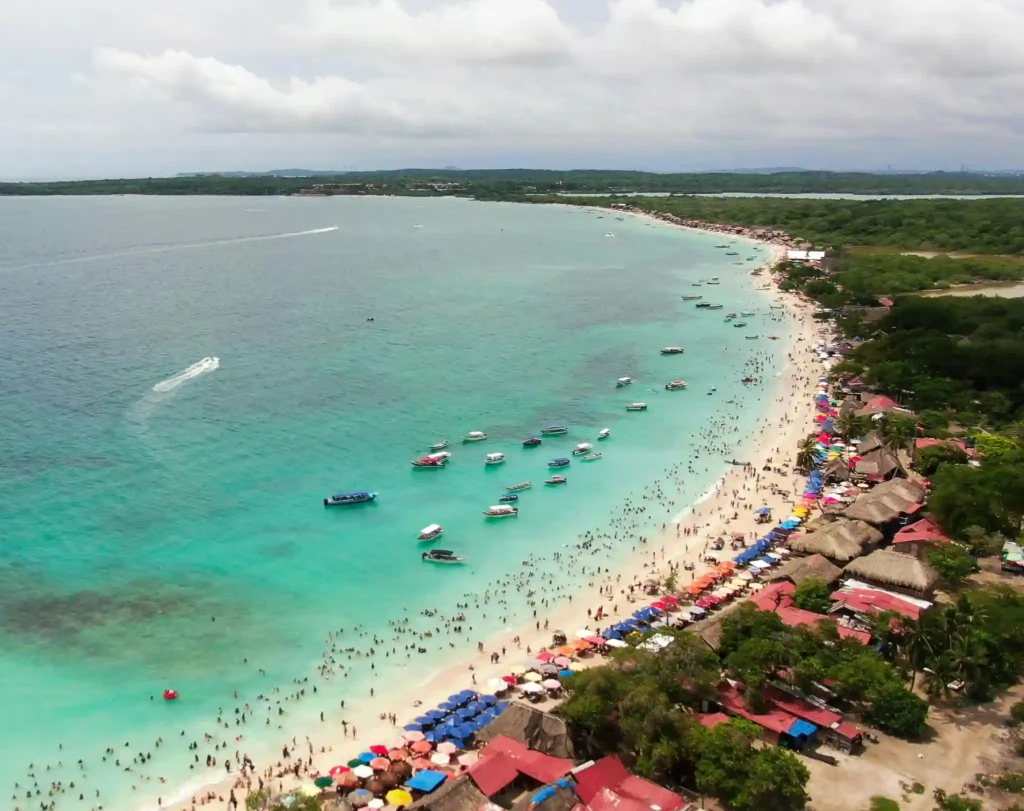
The best comparison is not “which one is prettiest.” It is “what kind of beach day do you want,” because Balandra is structured around conservation and calm water instead of nightlife, surf, or unlimited access.
Here are five well-known comparators that show the range.
Comparison table
| Beach | What it is known for | Access style | Swim conditions |
| Balandra | Shallow turquoise bay, dunes, mangroves, and strict conservation rules | Shift entry with caps and bracelet system | Generally calm, but avoid the pit area and monitor tides. |
| Playa Delfines | Major public beach in Cancun, easy to reach | Open public access | Can have stronger surf; follow flag conditions. |
| Playa Norte | Calm, shallow water and a classic Caribbean beach day | Easy access via Isla Mujeres | Typically calm and shallow near shore. |
| Playa del Amo | Hidden beach experience inside a crater-like opening | Strictly controlled access with a daily cap | Access depends on conditions; safety rules are strict. |
| Cabo Pulmo National Park | Coral reef snorkeling and diving focus | Protected area entrance fee | Water exposure varies; it is more of a reef destination than a shallow bay. |
This comparison uses official or guidebook-style sources for each destination’s defining traits and access realities.
Practical tips for first-time visitors
1) Decide your shift first, then build your transport plan around it. The beach is not “open all day” in the usual sense.
2) If you are using the Playa Bus, do not assume perfect alignment with the entry window. Consider aiming for the afternoon shift so you are not racing the morning cutoff.
3) Bring water and sun protection as if you are going into a desert environment. Baja’s climate is hot and dry for much of the year.
4) Pack out your trash. This is an explicit visitor rule and one of the simplest ways to protect the bay.
5) Treat the “fosa” warning seriously. If you see signage or locals avoiding a zone, do the same. The risk is currents and sudden depth changes, not a myth.
6) Do not climb dunes or the mushroom rock. Even if you see old photos of people doing it, the current rules are clear.
7) If you want the sandbar experience, check the tides before you go. It is not constant.
Common mistakes tourists make
. The biggest mistake people make is treating Playa Balandra like a normal beach
It’s not.
You can’t just show up anytime, stay all day, and figure things out as you go. The shift system, limited facilities, and conservation rules mean that small planning mistakes can ruin the experience.
Arriving without understanding the shift schedule, then being surprised when entry stops, or the beach clears for turnover.
Treating the beach like it has full-service facilities and then scrambling for water, shade, and toilets. The official services list is minimal for a reason.
Climbing sensitive features for photos, especially dunes or the mushroom rock, despite explicit rules against it.
Underestimating tides and currents, especially around the pit area, and assuming “shallow” means “no hazards.” Local reporting is clear that currents can create risk. [88]
Using the bus without planning for return waits in direct sunlight. Visitors have reported long waits, and there is limited shade.
Is Playa Balandra worth visiting
Yes, for most travelers, it is worth visiting, but only if you accept it on its own terms.
If your idea of a perfect beach day is calm water, wading, kayaks, and a landscape that looks unreal in person, Balandra delivers in a way that few easy-access beaches do. The conservation rules and cap system are part of why it still feels undeveloped compared with many popular beach destinations.
If you want nightlife, restaurants on the sand, or a “walk up anytime and stay all day” vibe, you may find the shift schedule frustrating. The bay is managed as a protected natural area, not as an entertainment strip.
Frequently Asked Questions
Where exactly is Playa Balandra Beach located?
It is on the Bay of La Paz near La Paz on the Baja California Peninsula, along the Gulf of California.
What are the coordinates of Playa Balandra Beach?
A practical map pin is 24.3212852, -110.3259368. A broader conservation component reference coordinate is 24°18′44″ N, 110°19′44″ W.
How far is it from La Paz?
About 27 km by road and roughly 25 to 30 minutes of driving, depending on traffic and your starting point in the city.
Can you get there without a car?
Yes. Options include taxi and the Playa Bus, though bus scheduling can be imperfect relative to the entry shift system.
What are the visiting hours, and how does the shift system work?
CONANP describes two shifts: 8:00 to 12:00 and 13:00 to 17:00, with a maximum of 450 visitors per shift.
How much does entry cost?
CONANP lists the entrance fee as 125 MXN per person per day, with exemptions and discounts for certain groups.
Is it safe to swim?
Much of the bay is shallow and calm, but there is a known risk zone referred to as the “fosa,” described locally as a sandy depression formed by currents that can create strong currents. Visitors should follow warnings and avoid risky zones.
What is the best time of year to visit?
CONANP recommends October through March. These months also broadly align with cooler conditions compared to peak summer heat.
Why is the mushroom rock important, and can you climb it?
It is a signature landscape feature, but current visitor regulations explicitly say not to climb the dune or the mushroom rock. Are dogs allowed?
Visitor rules state that dogs are only allowed on leash on the main beach. That implies restrictions and the need to follow local guidance and enforcement.
